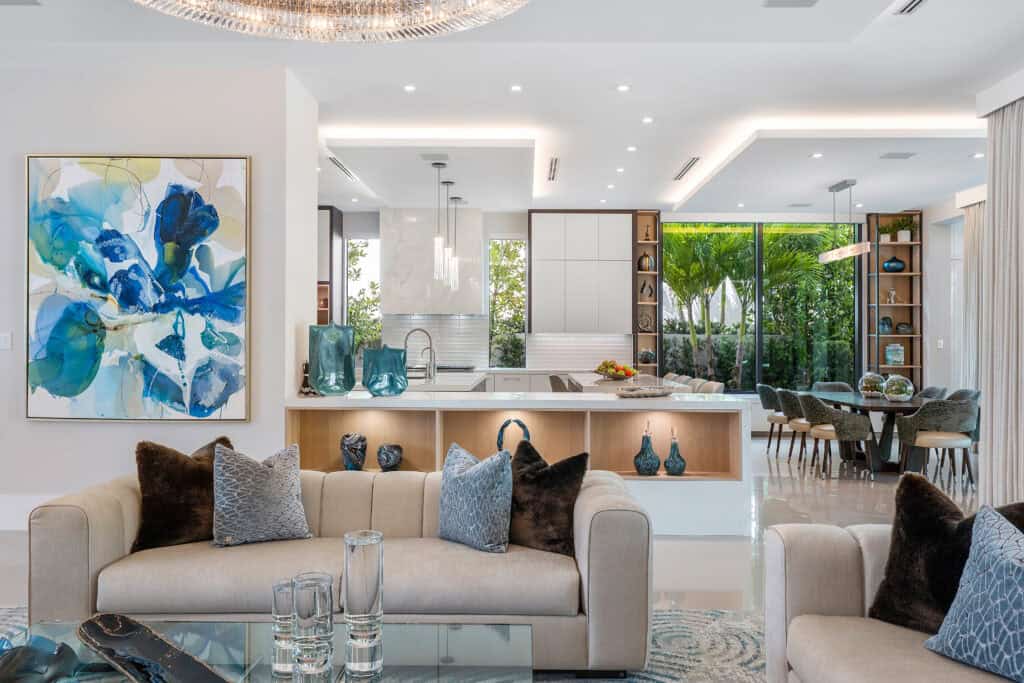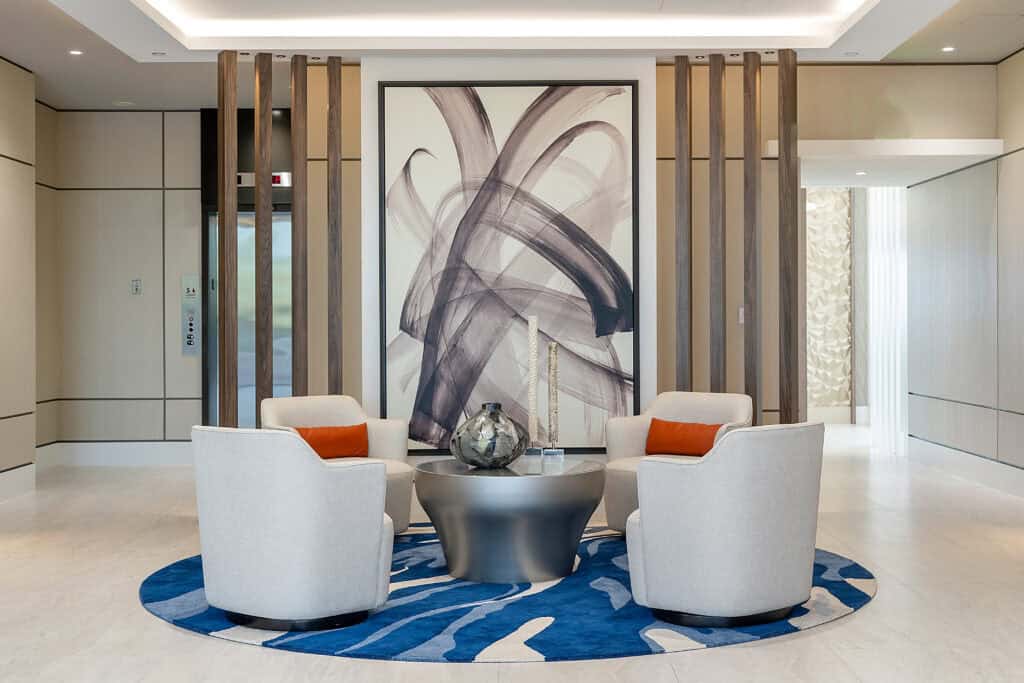
Commercial hospitality interior design applies the sequencing logic, material standards, and experience-first thinking developed in hotels and resorts to the commercial projects that need it most: clubhouses, amenity centers, mixed-use lobbies, and shared community spaces. Brown Design Group applies this framework to developments across South Florida, including communities near West Palm Beach. The environments that result welcome people naturally, perform under constant use, and hold their character long after the doors first open.
A space that works doesn’t happen by accident. It’s the result of deliberate decisions about how people arrive, move, gather, and return — and it’s a way of thinking that has quietly become one of the most valuable tools in commercial interior design.

What Is Commercial Hospitality Interior Design?
Hospitality design is a philosophy centered on experience, not aesthetics. It treats a building as a sequence of connected moments — from the first impression at arrival through every transition in between — rather than a collection of individual rooms.
Those same questions apply far beyond the hospitality industry. A clubhouse lobby, residents’ lounge, or waterfront amenity center succeeds when people instinctively understand how to use it. Good design removes friction before anyone realizes it existed.
How Do Hospitality Principles Apply to Amenity Space Design?
The strongest amenity spaces share three qualities that hospitality design has spent decades refining.


Arrival Sets the Tone
The first thirty seconds inside a building establish expectations for everything that follows. Lighting, ceiling height, sightlines, and material transitions begin communicating purpose before anyone reads a directional sign. A thoughtfully planned arrival sequence creates confidence almost immediately.
Flow Should Feel Effortless
People shouldn’t need to stop and decide which direction to walk. Furniture layouts, architectural cues, lighting, and subtle changes in materials should quietly guide them from one destination to the next. When circulation has been carefully considered, the experience feels invisible. When it hasn’t, even beautifully designed interiors leave visitors uncertain about why.
Materials Should Improve with Use, Not Decline Because of It
Commercial amenity spaces experience far more activity than most private residences. Hospitality design approaches material selection differently — asking not only how a finish looks at handoff, but how it will perform five or ten years later. Durability becomes part of the design itself rather than a compromise made after the fact.

What Sets Hospitality-Informed Amenity Design Apart?
The difference between decorative design and hospitality-informed design isn’t always visible at handoff. It becomes clear after years of everyday use.
Decorative interiors focus on individual rooms, selecting finishes that create an immediate impression. Hospitality-inspired interiors begin with the relationships among spaces, coordinating lighting, circulation, materials, and furnishings into a single continuous experience. Rather than relying on signage to resolve confusion or renovations to address premature wear, hospitality-informed design anticipates those challenges in advance.
Where These Principles Come to Life
Brown Design Group applied this philosophy while designing the clubhouse and amenity spaces at Yacht & Racquet Club of Boca. Rather than approaching the project as a series of individual rooms, the design considered how residents would experience the building as a whole — arrival, circulation, gathering spaces, and indoor-outdoor transitions planned as connected moments.
Material selections reflected South Florida’s coastal climate, balancing durability with warmth and refinement. The objective wasn’t to recreate a luxury hotel. It was to apply the discipline behind hospitality design to a residential community where shared spaces serve as an extension of home.
Why This Matters for Developers, Boards, and Property Managers
For developers, thoughtfully designed amenity spaces become lasting differentiators. For HOA and COA boards, they help reduce premature renovations and ongoing maintenance concerns. For property managers, they create spaces that continue performing as intended rather than requiring constant adjustments.
Ultimately, hospitality thinking isn’t about luxury. It’s about longevity.
Frequently Asked Questions
- What is hospitality design, and why does it matter for commercial projects?
Hospitality design focuses on how people experience a connected sequence of spaces — from arrival through each transition to where they gather and settle. The same principles that make a hotel feel effortless apply directly to clubhouses, amenity centers, and mixed-use buildings where shared spaces need to perform under daily use.
- Why do some amenity spaces feel dated within a few years?
Usually because they were designed for handoff rather than long-term use. Materials chosen for appearance rather than durability show wear faster, and spaces without intentional flow feel disorganized once residents inhabit them. Both problems are solved during the design phase, not after.
- How does Brown Design Group approach commercial amenity projects?
The sequence comes first. Before a material or furnishing is selected, Brown Design Group maps the full experience from arrival through every transition in the space. It’s the same methodology behind strong hospitality design, adapted for communities and commercial buildings where residents live with the result every day.
The Lasting Value of Hospitality Thinking
Hospitality design principles aren’t limited to hotels. They’re rooted in understanding how people experience space over time and translating that understanding into environments that feel intuitive, welcoming, and enduring.
Commercial hospitality interior design is the discipline behind spaces that do both — look considered at handoff and continue performing years later. Because the most successful spaces aren’t remembered for a single finish or piece of furniture. They’re remembered for how naturally they made people feel at home.