Luxury interior design in Boca Raton involves more than selecting finishes and furnishings. It is a connected process shaped by the home’s architecture, how its owners live, the demands of the South Florida environment, and the details that bring it all together.
For more than 40 years, Brown Design Group has worked with South Florida homeowners to create interiors that balance aesthetics with function, material performance, and longevity. In Boca Raton, where coastal conditions and expectations for luxury homes are particularly high, those considerations influence the design from the beginning.
What Does a Luxury Interior Designer in Boca Raton Do?
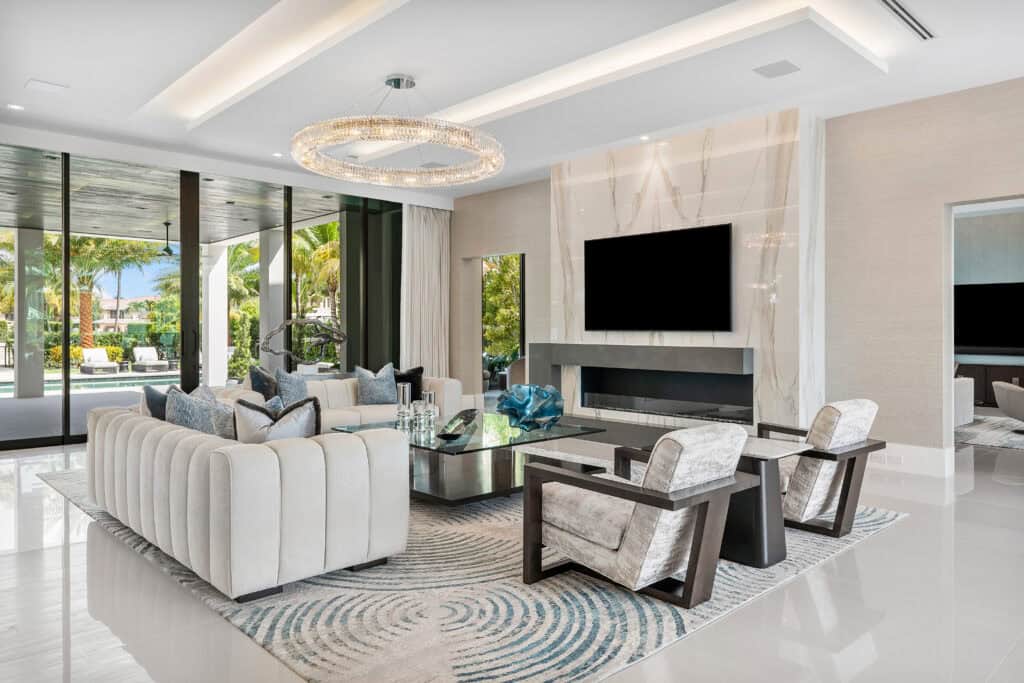
A luxury interior designer in Boca Raton manages more than furnishings and finishes. Depending on the project, the role can include space planning, interior architectural details, lighting coordination, custom millwork and cabinetry, material specification, furniture and fixture procurement, coordination with architects and contractors, and final installation.
The process begins by understanding the architecture of the home: its proportions, natural light, views, circulation, and relationship between interior and exterior spaces.
From there, individual decisions can be developed as part of a larger design, not as separate layers.
Lighting works with architecture. Millwork responds to proportion. Furniture is scaled to the room. Materials are selected for both appearance and performance.
The result is an interior that feels cohesive because the decisions behind it were considered together.
Why Boca Raton Homes Require a Different Design Approach
South Florida’s environment introduces considerations that can directly influence residential material and design decisions.
Humidity, UV exposure, proximity to salt air, strong natural light, and the indoor-outdoor relationship all need to be considered when specifying materials and finishes.
Boca Raton’s residential architecture adds another dimension. Waterfront estates, contemporary residences, condominiums, and established homes each present different opportunities and constraints.
Rather than applying a predetermined aesthetic, the design needs to respond to the existing architecture and how homeowners intend to live within it.
That means asking more than whether something looks right.
How will the material respond to the environment? How does natural light change throughout the day? How will the room actually be used? How should furniture relate to the scale of the architecture? How will the individual spaces connect as one home?
Luxury residential design comes from resolving those questions together.
Why an Integrated Design Process Matters
The strongest interiors rarely result from isolated decisions.
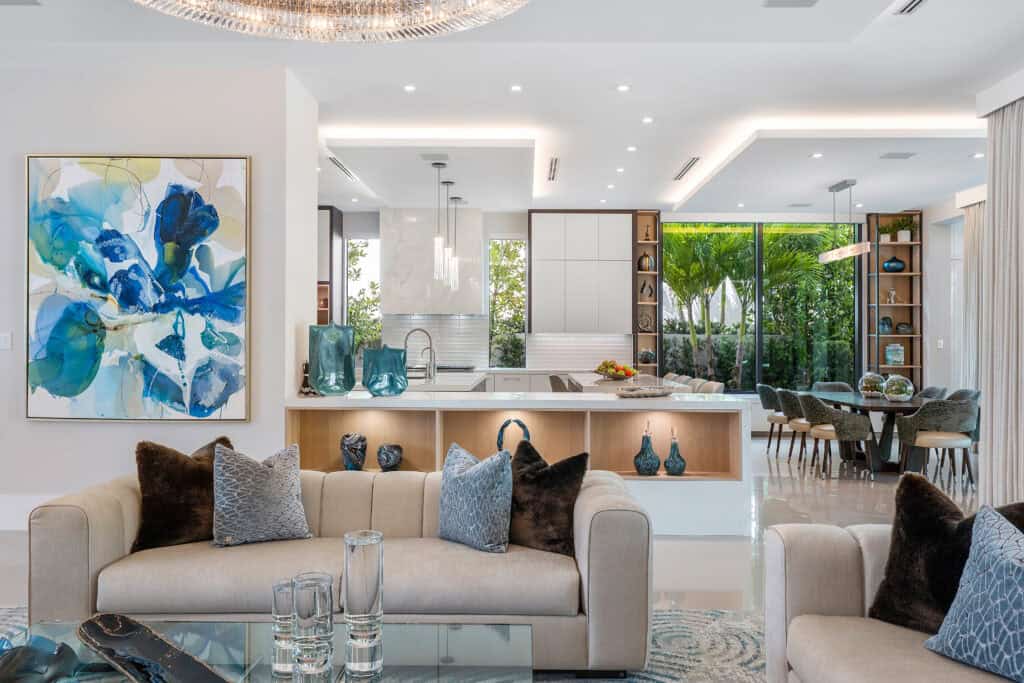
A change to a ceiling detail can influence lighting. A custom built-in affects electrical requirements, furniture placement, and circulation. Flooring transitions influence how adjoining rooms relate to one another. Window treatments affect both natural light and the way an exterior view is framed.
An integrated design process considers those relationships early.
For projects involving architects, builders, contractors, fabricators, and specialty trades, early collaboration also allows the interior design to develop alongside the larger project rather than after major decisions have already been made.
This is especially important for new construction and substantial renovations, where planning decisions can shape what is possible later.
How a Luxury Residential Design Project Unfolds
Every home is different, but a full-service luxury residential design process typically develops through several connected phases.
Phase 1: Discovery and Programming
The process begins with the home and the people who will live in it. The design team considers the architecture, natural light, views, existing conditions, lifestyle requirements, project scope, and overall goals.
Phase 2: Concept Development
Space planning, interior architectural elements, material direction, furnishings, and lighting begin to take shape. When architects, builders, or contractors are involved, coordination can begin during this stage so the interior and architectural direction develop together.
Phase 3: Design Development and Specification
The concept becomes a detailed set of selections and specifications. The team finalizes materials and finishes, develops custom millwork and cabinetry, coordinates lighting and electrical requirements, and selects furnishings and fixtures with scale, performance, and lead times in mind.
Phase 4: Procurement and Coordination
The team places and tracks orders while continuing to coordinate with contractors, fabricators, installers, and other project partners. Site visits and ongoing communication help keep execution aligned with the design.
Phase 5: Installation and Completion
During installation, furnishings, lighting, artwork, accessories, and custom elements come together. Final placement, styling, and project details complete the transition from design concept to finished home.
Luxury Interior Design in Practice: The Palm Residence
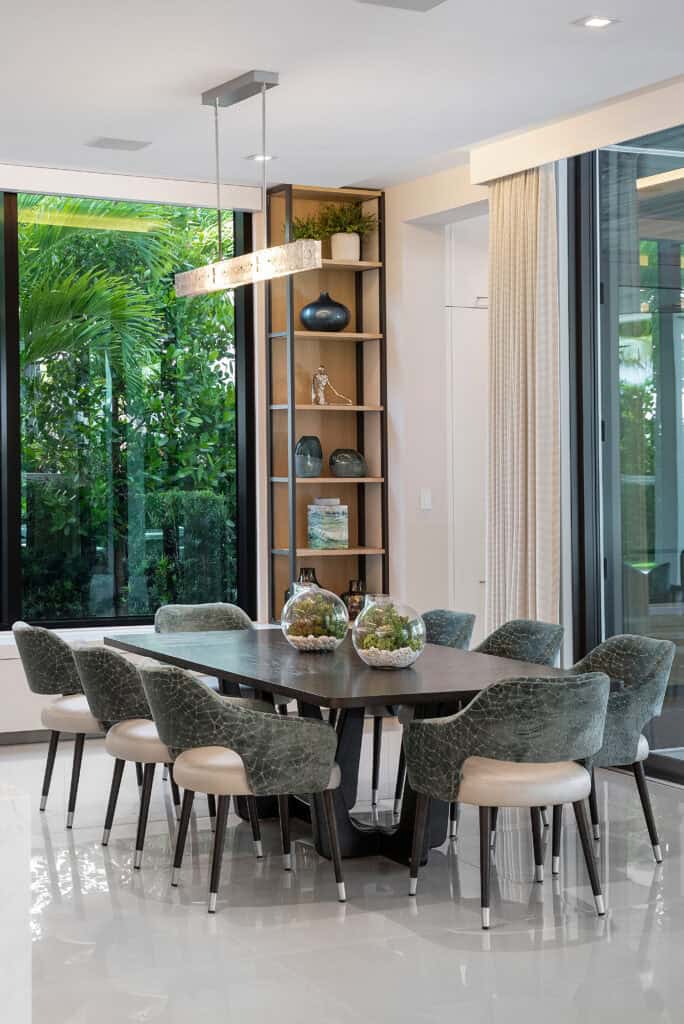
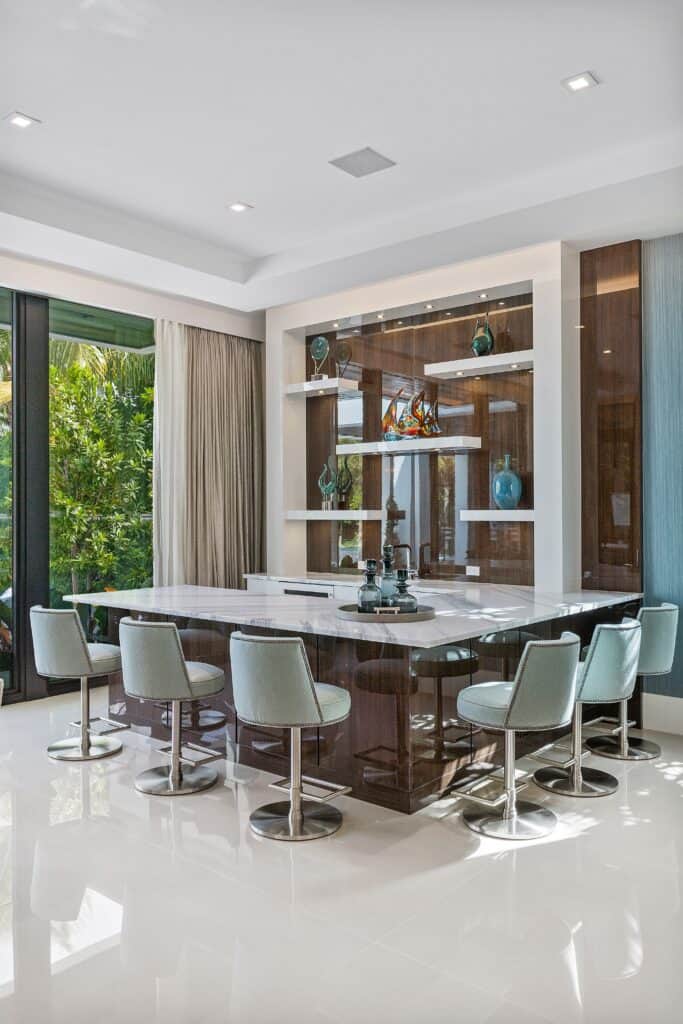
The Palm Residence offers a look at how Brown Design Group’s residential process moves from concept into execution.
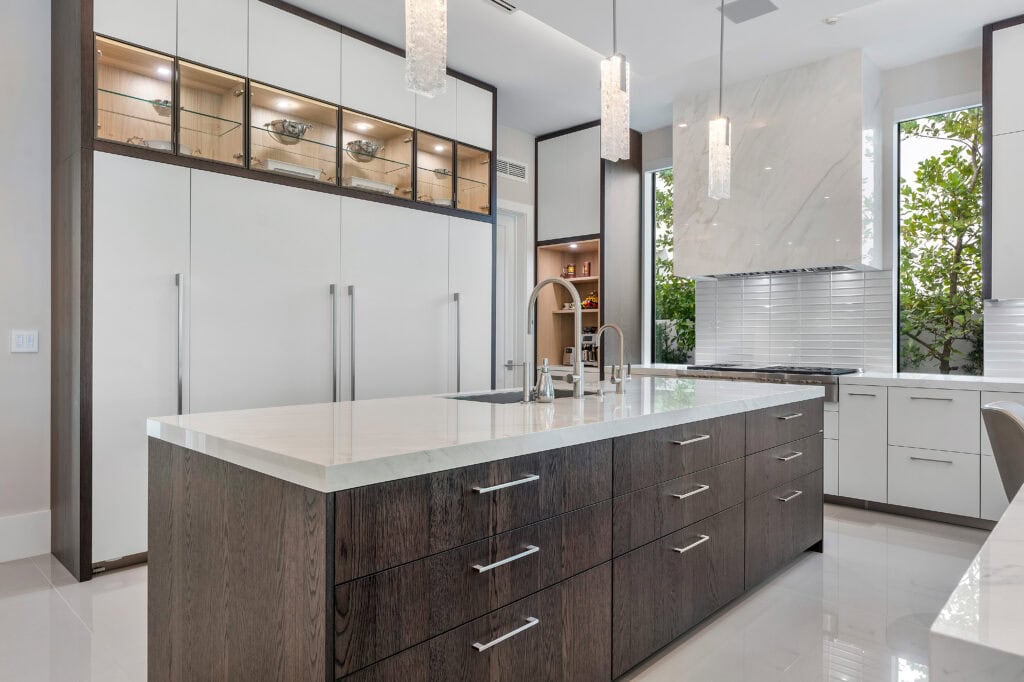
The project progressed through initial sketches, blueprint planning, architectural development, flooring and wall texturing, and customized kitchen cabinetry before reaching the finished interior.
That progression is valuable not just for the final result. It shows how many decisions happen before a room reaches the stage seen in finished photography.
Plans establish the framework. Architectural elements define proportion. Materials establish continuity. Custom cabinetry is developed for the specific space. Furnishings then complete an interior whose foundation was established much earlier.
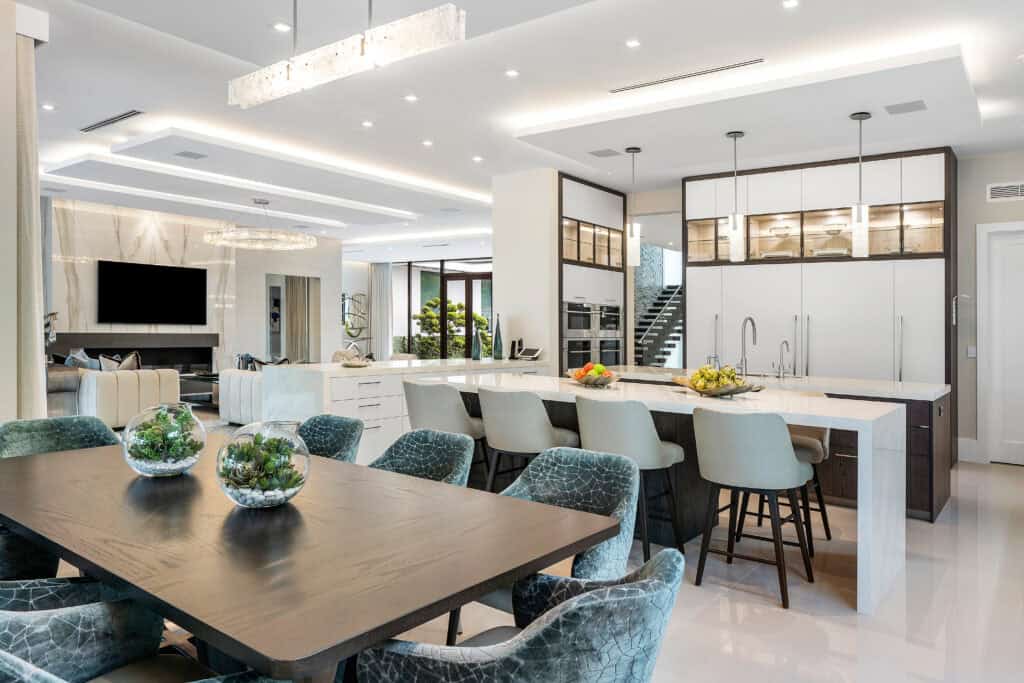
That is the difference an integrated residential design process can make: the finished home feels cohesive because its individual elements were developed as parts of the same idea.
Material Selection for South Florida Homes
Material performance is an important part of luxury interior design in Boca Raton and throughout Palm Beach County.
Evaluate flooring for the environment in which it will be installed, including humidity, maintenance, traffic, and the relationship between indoor and outdoor areas. Wood, stone, porcelain, and other materials each bring different performance considerations alongside their aesthetic qualities.
Cabinetry, hardware, and millwork require similar attention. In coastal environments, materials and finishes may need to be evaluated for humidity and proximity to salt air, depending on where and how they are being used.
Natural light also matters.
For textiles, rugs, artwork, finishes, and other materials exposed to significant sunlight, consider UV exposure and the space’s orientation.
No single specification works for every South Florida home. The appropriate material depends on the application, exposure, lifestyle, maintenance requirements, and overall design intent.
That is why material selection is part of the design process, not a decision based solely on appearance.
Brown Design Group’s Approach to Luxury Residential Design
For more than 40 years, Brown Design Group has approached luxury residential interior design as a connected process that brings architecture, materials, furnishings, lighting, custom details, procurement, and installation together.
The firm’s Boca Raton showroom gives clients access to curated furnishings, finishes, lighting, and materials while working alongside the design team.
Across South Florida, every residence presents a different combination of architecture, environment, lifestyle, and personal preference. Brown’s approach begins with those conditions rather than applying a predetermined look.
The goal is not simply to create a beautiful home. It is to create an interior where architecture, function, materials, and furnishings feel as though they were always intended to exist together.
Frequently Asked Questions
What does a luxury interior designer in Boca Raton do?
A luxury interior designer can manage space planning, interior architectural details, lighting coordination, custom millwork and cabinetry, material and finish selection, furnishings, procurement, project coordination, and installation. The exact scope depends on the home and project, but full-service design considers these elements as parts of one overall interior.
What should I look for when choosing a luxury interior designer in Boca Raton?
Look for experience with homes comparable to your project’s scale and architectural character, a portfolio that demonstrates completed work, and a clearly defined process from planning through installation. For South Florida properties, it is also valuable to understand how the designer considers climate, natural light, coastal exposure, and indoor-outdoor living when selecting materials.
How does South Florida’s climate affect interior design decisions?
Humidity, strong natural light, UV exposure, and coastal conditions can influence the performance of flooring, cabinetry, hardware, textiles, finishes, and other materials. The appropriate specification depends on the home’s location, exposure, use, and maintenance requirements.
When should an interior designer be brought into a new construction or renovation project?
Ideally, the interior designer should be involved early, before major architectural, lighting, electrical, millwork, and finish decisions are finalized. Early collaboration lets interior planning develop alongside architecture and construction, rather than requiring those decisions later.
How long does a luxury residential interior design project take?
Timelines vary based on the home’s size and complexity, construction scope, custom fabrication, product lead times, approvals, and procurement requirements. Bringing the design team in early helps identify these dependencies and build a coordinated project schedule from the start.
Brown Design Group provides full-service luxury residential interior design throughout Boca Raton, Palm Beach County, Broward County, and South Florida. Explore Brown’s residential design portfolio or contact Brown Design Group to discuss an upcoming home.